

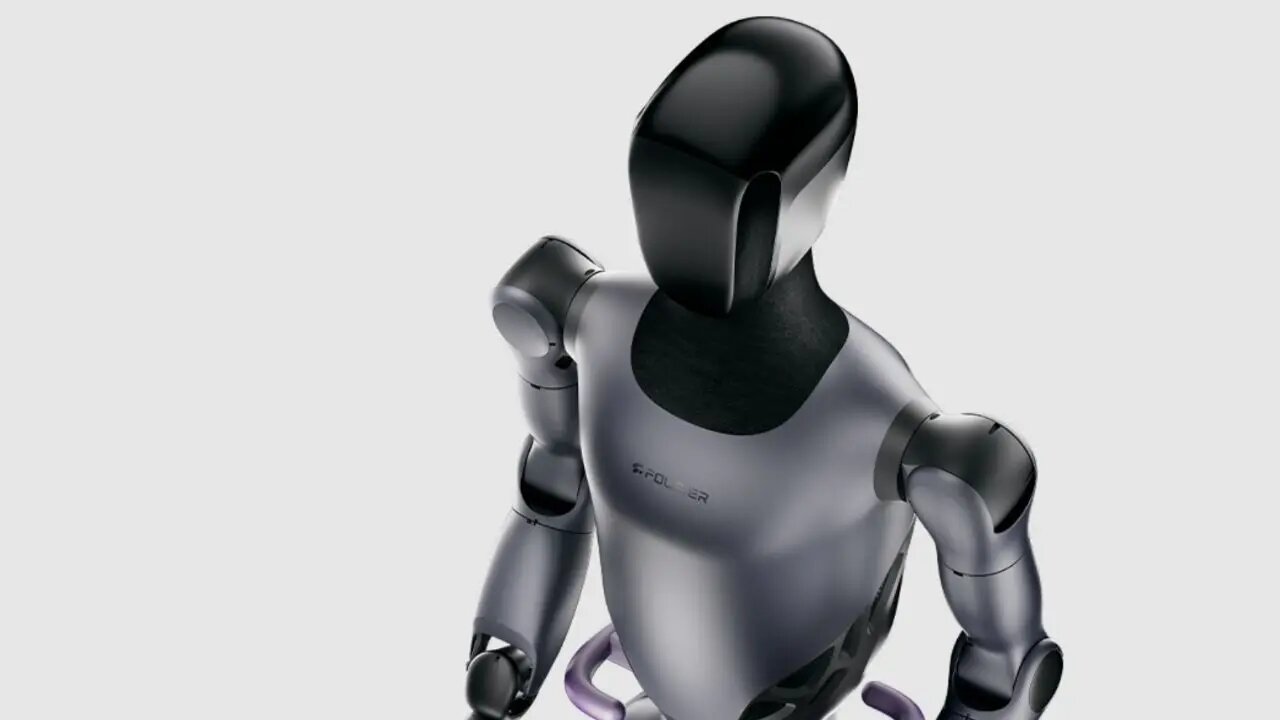
The escalating costs of in-home care in the U.S., now exceeding $60,000 annually on average, are a growing concern, pushing families to seek more viable solutions. Enter Fourier Intelligence’s latest creation, the GR-2 humanoid robot, a groundbreaking innovation in the field of elderly care and assistance for those with disabilities. Far from simply replacing human caregivers, this advanced technology aims to enhance the quality of life for individuals who depend on regular assistance.
As we approach an era where the global elderly population is expected to double by 2050, the need for cost-effective caregiving solutions becomes increasingly urgent. The GR-2 humanoid robot promises to address this challenge, offering reliable, personalized care that could potentially reduce annual expenses for families. This technology might just be the game-changer the world is waiting for, poised to revolutionize home care.
Standing at an impressive 5 feet 9 inches and weighing 139 pounds, the GR-2 is designed for strength and stability, essential for aiding with mobility tasks such as transferring individuals from beds to wheelchairs. This sophisticated machine is fortified with significant hardware improvements, boasting a peak torque exceeding 280 pound-feet, enhancing its agility and expanding its range of capabilities. The improved battery life—thanks to a newly designed detachable battery—extends the robot’s functional runtime by an hour, making it more practical for extended use in caregiving scenarios.
One of the standout features of the GR-2 is its remarkable precision in motion. The robot now offers 12 degrees of freedom in its hands, allowing for twice the dexterity of its predecessors. Equipped with six advanced tactile sensors, it can accurately gauge force, discern shapes and textures, and adjust its grip in real-time. This sensitivity is crucial for handling various daily tasks, enabling safer and more precise interactions with objects.
Further enhancing its capabilities are seven uniquely developed actuators tailored to meet the specific torque needs of every joint, enabling more natural, human-like movements. This refined mobility sets a new benchmark for robot agility, allowing the GR-2 to perform complex maneuvers with ease.
While the GR-2 is currently a tool for developers and researchers, its design is a developer-friendly platform compatible with popular robotics software like ROS, Mujoco, and NVIDIA’s Isaac Lab. This compatibility facilitates the training of the robot to undertake even more sophisticated tasks, heralding a future brimming with potential advancements in AI-driven assistance.
As the GR-2 continues to be fine-tuned for market readiness, there is great anticipation surrounding its eventual release. With Fourier Intelligence spearheading these innovations, the prospects of integrating advanced robotic solutions into our daily lives become increasingly promising. The continuing evolution of such technologies holds the potential to substantially improve the quality of life for those in need of care, possibly reshaping the landscape of global caregiving standards.
In summary, the GR-2 humanoid robot signifies a monumental leap in the field of robotics, portraying a future where these machines could become an integral part of our households, offering indispensable support and companionship. As the world eagerly awaits its arrival, one might wonder: Will robots like the GR-2 become a commonplace feature in homes, enhancing our way of living in the years to come?