

At a recent visit to Google’s Pier 57 offices in New York, I caught a glimpse of what could soon be a staple in our daily lives—smart glasses equipped with extraordinary capabilities. As I donned these wireless spectacles, Google Maps materialized beneath my feet, Uber updates flashed before my eyes, and conversations in Chinese became instantly comprehensible, thanks to real-time translation. Another prototype, connected via cable, transformed my surroundings into a mixed-reality playground, reminiscent of a portable VR headset, highlighting the different possibilities within this evolving tech space.
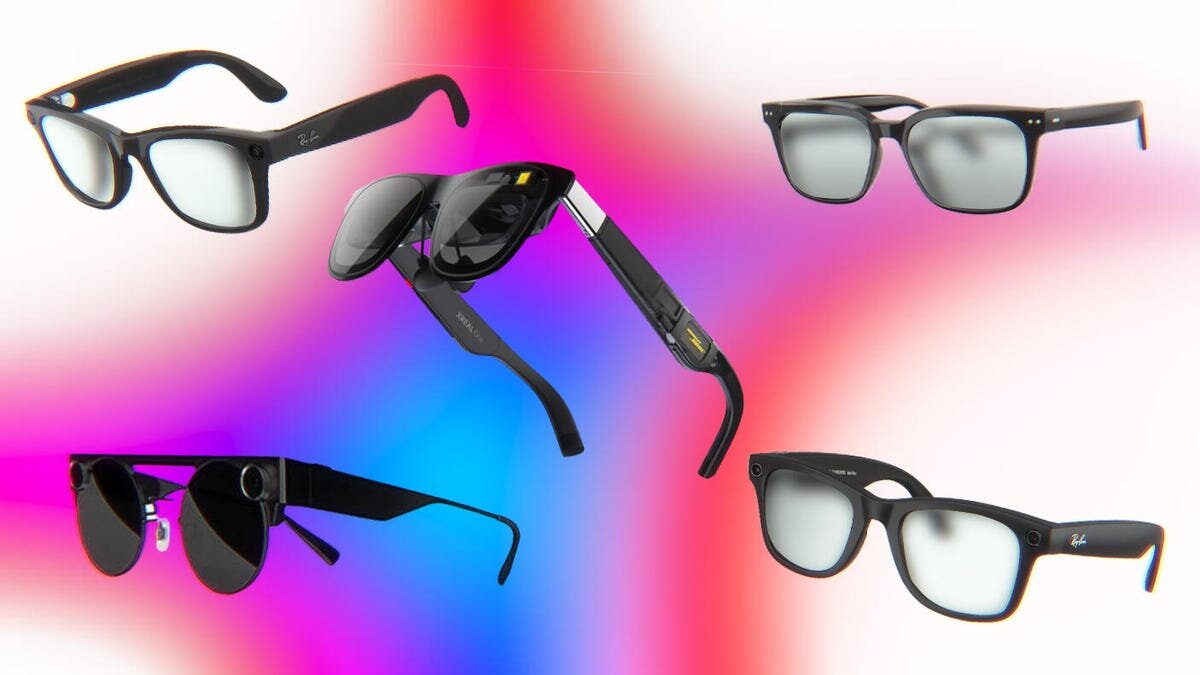
Come 2026, these smart glasses could be within your reach, offering a mix of characteristics—some sleek and discreet for everyday use, others geared towards augmented reality (AR) experiences. My desk brims with such innovations: smart black frames with one-eye color displays, Ray-Bans that play music and capture images, black glasses featuring ChatGPT integration and interchangeable lenses, as well as thin frames wielding displays sans audio components.
Smart glasses are swiftly steering the tech realm, akin to the smartwatch uproar of the early 2010s. Tech giants like Meta, Google, Samsung, Amazon, and innovative eyewear brands EssilorLuxottica, Warby Parker, and Gentle Monster, are spearheading a surge reminiscent of past wearable tech waves. Meta’s Ray-Ban glasses, initially received as quirky novelties, have found favor as travel companions. Google’s head of Android, Sameer Samat, draws parallels to Tony Stark’s visionary spectacles, forecasting smart technology that proactively aids users’ tasks in real time.
Despite remarkable strides since Google Glass first sparked debates about privacy in 2013, smart glasses still face hurdles. Yet, as they become less cumbersome and more integrated into daily fashion, the trade-offs seem increasingly palatable for the astounding functionalities they offer.
The smart glasses landscape is diverse, with varying features from audio assistance to camera functionality, as companies strive to invent the ideal multi-functional spectacles. As the industry looks ahead, major tech events like CES are expected to spotlight AI-infused glasses capable of leveraging contextual awareness to enhance user experience, reflecting AI’s infiltration into this emerging gadgetry.
Walking around with large glasses that interpret my immediate environment and provide AI-driven assistance signals where companies see this technology heading—glasses blending real and digital worlds efficiently and effectively. Meta’s Andrew Bosworth envisions a spectrum of AI-powered eyewear catering to varied lifestyles and uses, capitalizing on distinct features instead of a one-size-fits-all approach.
The leap to incorporate smart glasses into our daily wear is accelerating, unlike in smartphones and smartwatches’ nascent stages, indicating a burgeoning growth trajectory. However, these devices still beg for clarity in defining what “smart glasses” signify.
Challenges remain, from battery longevity and comfort to seamless phone integration and privacy safeguards. However, the push towards more intuitive, voice-driven AI, as explored in Samsung’s Galaxy XR headset, pioneers a path for more interactive and contextually aware glasses capable of revolutionizing our interactions with technology.
As smart glasses try to blend seamlessly with everyday life, advancements are being made in gesture controls, where options from wristbands to rings are bridging the control gap on this eyewear. However, refining interactions to ensure simplicity and intuitive use is crucial for mass adoption.
Additionally, the display technology of smart glasses is evolving, striving to offer larger viewing fields and richer multimedia experiences without tethering to phones or sacrificing sleek design for functionality. Progress is ongoing in ensuring these displays balance usability, power, and user interaction without being obtrusive or bulky.
The endeavor to miniaturize these tech marvels, without compromising essential features, continues as companies address the inherent trade-offs in achieving fashionable, lightweight smart glasses. Simultaneously, the industry confronts challenges like accommodating prescription lenses, essential for broader accessibility.
Privacy concerns loom large, especially with AI-enabled glasses potentially tracking and analyzing real-world data. Tech companies must navigate these sensitivities by establishing transparent protocols to assuage public apprehensions while safeguarding user data.
However, the consumer landscape is optimistic, with product lines expanding and groundbreaking features gradually converging into user-friendly devices. While the journey resembles the evolutionary path of smartwatches, those who crack the code on style, functionality, and wearability will pioneer a revolution in personal tech.
As smart glasses make their way into mainstream markets by 2026, they promise to redefine personal technology, converging communication, entertainment, and assistance into a single, wearable interface. This shift challenges developers and users alike in navigating a future where our digital and physical realities intersect seamlessly—and often invisibly—in front of our eyes.